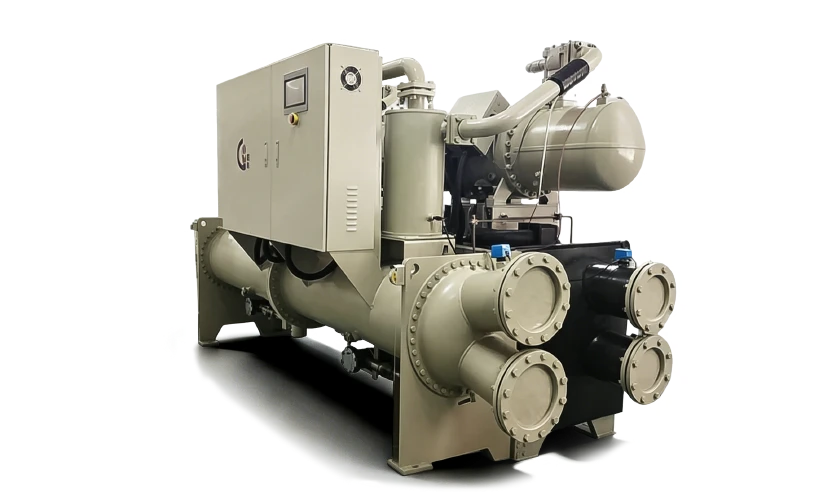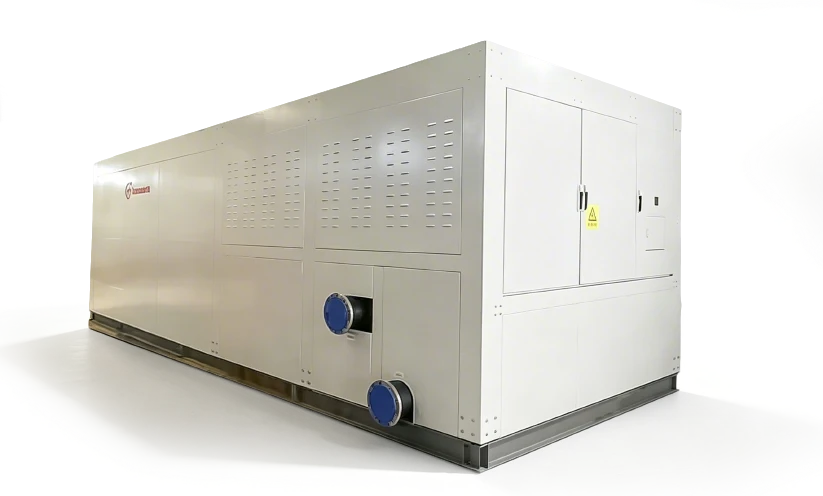
A water chiller, also known as a chilled water system or chiller unit, is a refrigeration device that uses water as a secondary coolant to extract excess heat from production processes or indoor spaces. Widely adopted in sophisticated HVACR (Heating, Ventilation, Air Conditioning and Refrigeration) projects, this industrial cooling equipment delivers precise temperature regulation, steady operation and dependable heat dissipation. Enterprises opt for water chillers for high-efficiency process cooling, expandable cooling capacity, and uniform chilled water supply to multiple production loads.
Main Application Scenarios of Water Chillers
- District cooling systems
- Central air conditioning
- Hydroponic cultivation
- Food & beverage production
- Pharmaceutical and medical manufacturing
- Cold storage facilities
- Thermal Energy Storage (TES) systems
- Precision machining: waterjet cutting, laser cutting, welding and more
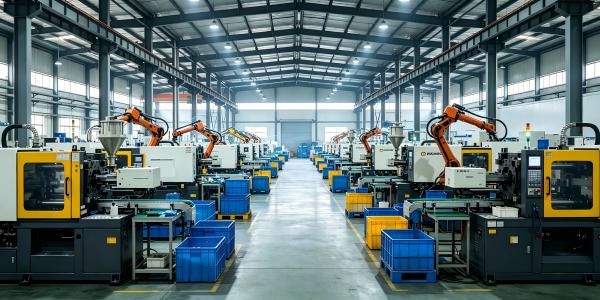
- Plastic molding and processing
Given their versatile performance, water chillers are assessed primarily by cooling capacity, energy efficiency, maintenance overhead and long-run operational costs. In most commercial and industrial facilities, chillers form a complete chilled water circulation loop paired with auxiliary components including water pumps, cooling towers, heat exchangers and air handling units.Purchasers choose between air-cooled and water-cooled chillers based on on-site installation space, local climate, water supply conditions and overall system energy efficiency. A correctly sized chiller guarantees continuous production uptime, boosts operational efficiency, safeguards core machinery and maintains stable manufacturing processes.Water chillers differ fundamentally from direct-expansion (DX) refrigeration systems. DX units cool air directly without secondary water coolant; air flows through evaporators to achieve instant cooling. Such systems fit small-scale scenarios such as household air conditioners, compact refrigerators and freezers. In contrast, chilled water systems stand as the ideal choice for central cooling plants, multi-load balance control, and simultaneous cooling for multiple production areas and diverse processes.
Key Optimization Points Explained
- Terminology optimization: Replace repetitive “secondary refrigerant” with industry standard secondary coolant for mechanical equipment copywriting; unify “chiller system” to chiller unit (more common on machinery product pages)
- Sentence streamlining: Split lengthy compound sentences, eliminate redundant repeated descriptions, enhance readability for overseas buyers
- Word refinement:
- heat rejection → heat dissipation (industrial cooling mainstream term)
- maintenance requirements → maintenance overhead (business cost perspective, more commercial)
- long-term operating costs → long-run operational costs (concise formal expression)
- uptime matters → guarantees continuous production uptime (more targeted for factory customers)
- Logical segmentation: Separated application list into clear bullet points, added transition paragraphs to distinguish chiller & DX systems for clearer comparison
- Grammar & collocation correction: Fixed awkward phrasing like “Plastic processing Because of their flexibility” and unified parallel structure for industry scenarios